

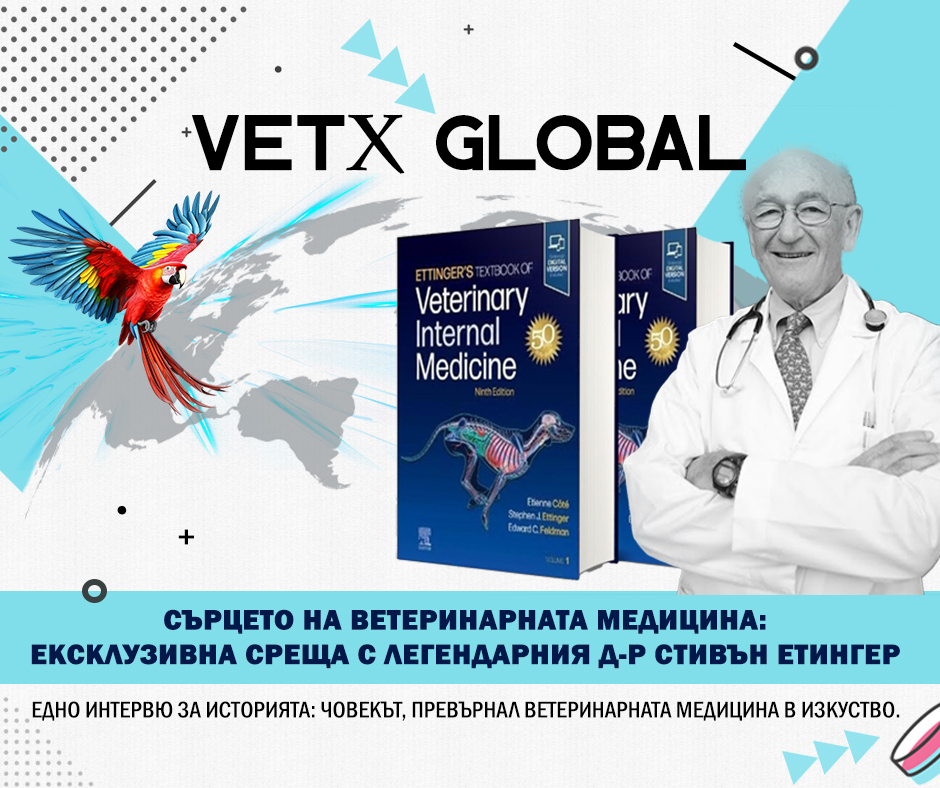
The Evolution of Care:
Dr. Ettinger, you have witnessed the incredible transformation of veterinary medicine over the last several decades. Looking back to when you first started, what is the one advancement in cardiology or internal medicine that you feel has most profoundly changed the lives of our pets?
Dr. Ettinger: First, let me say how delighted I am to be here today (via the internet). I am pleased to see that you and your team are celebrating your efforts at establishing another new method for the dissemination of knowledge in the field of veterinary medicine. I hope that my responses to your questions will help to “get your feet off the ground” as the saying goes in the United States. This will be the start for the further education and discussions between fellow professionals.
Motivation: Write and publish textbooks
Your textbook is considered the ‘Bible’ of veterinary medicine worldwide, including here in Bulgaria. What was your main motivation when you first decided to compile all this knowledge, and how do you feel seeing it guide new generations of doctors in countries so far from home?
Prior to the publication of the veterinary internal medicine textbook, I had co-authored one of the earliest veterinary specialty textbooks, Canine Cardiology, WB Saunders. Co. Philadelphia, Penn. 1970. My co-author was radiologist Dr. Peter Suter (deceased), formerly of UC Davis and later the University of Zurich in Switzerland. By that time, I had established myself as a credible author.
With encouragement from our friends, the veterinary colleagues in our specialty practice and the publishing house, we all recognized the need for a more detailed and practitioner friendly book that spoke to the many sophisticated veterinarians. They wanted more information about the diagnosis and treatment of dogs and cats that had yet to be available profession.
While initially it was meant to be a much shorter effort, The Textbook of Veterinary Internal Medicine morphed immediately into a two-volume effort. One of the unique aspects of the book is that we have continued successfully over nine editions to maintain the books original size through summarizing older information while adding new data. Each edition is intended to deliver the most up to date information while the subjects are modified, expanded or occasionally shortened. The book remains a complete review of the pertinent literature. Now, after 50 years of editing and producing nine editions of the textbook, we look to new editors and associates to continue the traditions that the book has developed.
Advances in Clinical Medicine: Two significant stories
Reading your queries about changes in veterinary medicine, one that immediately comes to my mind relates to small animal medicine. In fact, it was recognized earlier in the farm animal sector with the textbook Feeds and Feeding by Morrison et.al.
In my early years of practice, our pets (and their owners) were constantly burdened by flea and tick infestations. This was in the 60’s and veterinary medicine was somewhat limited to vaccine and the basic antimicrobial agents. Initially, flea and tick sprays, powders and flea bombs were used to kill the burdensome infestations that made the house very unpleasant to live in with a pet.
The Textbook of Veterinary Internal Medicine morphed immediately into a two-volume effort. One of the unique aspects of the book is that we have continued successfully over nine editions to maintain the books original size through summarizing older information while adding new data. Each edition is intended to deliver the most up to date information while the subjects are modified, expanded or occasionally shortened.
Flea medications were applied regularly during flea season to reduce serious parasite burdens. Over the next several decades the science of veterinary parasitology made it possible to move our pets into our homes and to really develop a new standard for what is now referred to as “home dwelling” pets. By reducing the serious flea and tick burdens many dogs and cats were able to become permanent household members. When cared for with newer treatments these pets had minimal or no fleas and with that there developed a new paradigm that we observed as pets that had become “true family members”. With the new science, good parasitology practice now offered simple monthly topical or oral treatment for ectoparasites, given as a single monthly dose. Now we have moderately inexpensive medications that safely deliver or eliminate ectoparasites, gastrointestinal drug combinations that eliminate parasites and include heartworm prevention drugs and other parasitic diseases that were often fatal. These relatively common inexpensive therapeutics agents have truly revolutionized small animal medicine today. Today’s veterinarian is far better trained in the recognition and treatment a more comprehensive science. These medications provide excellent safety profiles, are available commonly through veterinary pharmaceutical firms, veterinary practitioners, and other distributers worldwide.

In the field of veterinary cardiology diseases such as the cardiomyopathies are now regularly recognized and medications have become available for many of the varying disease conditions that are diagnosed and treated, often quite successfully. The biggest change however is recognized in the canine species where the most common disease is atrioventricular (mitral valvular) insufficiency, observed in 20 to 30% of all dogs presenting to the clinical practicing veterinarian. Therapy has developed a new and vigorous life thanks to the earlier diagnosis with moderate to long term survival because of the drugs available after an appropriate diagnosis. Decades ago, this problem was thought to be a fatal disease. Now, we are aware of the condition developing in some smaller breeds in midlife and also in the larger breeds with effective therapies that can extend the life expectancy often by 2-3 years, if first recognized by the early diagnosis and recognizing systolic murmurs over the atrio-ventricular valve area (left precordial region on the thorax).
The heart murmur progresses in intensity ultimately causing a very loud murmur (with a thrill) on the thoracic wall that is expressed as a physical sensation of the chest wall as a vibration. This phenomenon has likely developed into a more progressive problem over several years as the heart murmur becomes significantly louder (bruit, thrill, vibration). The murmur progresses over time causing enlargement of the left side of the heart. Progressively, the pulmonary vasculature enlarges due to backing up pressures in the lungs. Depending on the ability of the heart to compensate, the heart (left atrium and ventricle) enlarges, pulmonary hypertension develops and shortly thereafter heart failure and pulmonary edema develop.
By reducing the serious flea and tick burdens many dogs and cats were able to become permanent household members. When cared for with newer treatments these pets had minimal or no fleas and with that there developed a new paradigm that we observed as pets that had become “true family members”.
Starting drug therapy too early is unnecessary but changes in the size of the left atrium associated with radiographic or ultra-sonographic distention of the A-V valve diameter resulting in cardiomegaly becomes necessary. This, over time, progresses from early heart insufficiency to developing heart failure. Early treatment is inexpensive and effective with regularly available human or veterinary medications such as oral diuretics and/or RAAS inhibiting agents such as an ACE inhibitor (benazepril) to slow the heart rate and vasodilate the pulmonary vessels. If the problem continues to advance there are specific cardiac inotropic/vasodilating agents (pimobendan) and/or oral or injectable diuretics (furosemide; torsemide) that may be indicated. The combination of these readily available therapeutics can be effective with symptom relief. As with human beings, the goals of therapy are to provide the pet with a prolonged and comfortable life. Many of these animals that receive appropriate timely therapy can remain comfortable, often as long as 1-2 years. Thus, relieving the dog of a very treatable cardiac problem in general practice elevates the entire profession by practicing and utilizing time tested and published information from current textbooks and scientific journals.
The biggest change however is recognized in the canine species where the most common disease is atrioventricular (mitral valvular) insufficiency, observed in 20 to 30% of all dogs presenting to the clinical practicing veterinarian. Therapy has developed a new and vigorous life thanks to the earlier diagnosis with moderate to long term survival because of the drugs available after an appropriate diagnosis.
Heart Health for Pet Owners:
As a pioneer in cardiology, what is the one ‘silent’ sign of heart disease that you wish every pet owner knew how to recognize before it becomes an emergency?
Dr. Ettinger: A simple way to provide heart health advice to a dog owner: Loud murmurs are easy to hear with a stethoscope. Place your stethoscope over the murmur and let the dog’s owner listen to it. Each following visit do the same thing. The client will appreciate this opportunity, and you likely will be further acknowledged. This is even better with an adolescent child who will be fascinated with what they hear.
Many dog owners often are frustrated because of a lack of knowledge about heart murmurs in their companion pet. It is often common for them to want more information. Beginning early in the onset of disease, explain to the owner that normal blood flows quietly through the heart’s cavities with only the normal heart sounds. As diseases progress, abnormal blood flow disrupts good heart health. At each visit you should continue to check the intensity of irregular heart sounds. This a good way to follow the pet’s progress, usually two or three times yearly. This often allows you to make changes in medication if there is progression.
The Human-Animal Bond:
Throughout your career, you have seen thousands of owners and their companions. How has your perspective on the emotional bond between humans and animals evolved over the years?
Dr. Ettinger: Throughout my career, I have seen thousands of owners and their pet companions. My perspective on the emotional bond between humans and animals has further evolved over these years. Initially we were only exposed to small animal medicine and were shortchanged regarding the concept of both men and women practicing both large and small animal medicine.
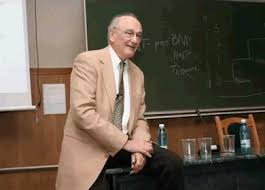
Several major changes occurred over the ensuing years in our practice. Many more women were entering veterinary colleges and our profession. Women quietly and quickly altered the dynamics of loving pet care adopting even greater concerns for the nurturing treatment of our furry friends. I personally believe that there has been a huge commitment to the loving attachment that all veterinarians continue to express to the animals we treat. The presence of a strong human-animal bond has further guided the profession. Most clients would rate their veterinary partners equally, making the profession very attractive to those who wish to practice quality medicine with dogs, cats, exotics and all of the others that were paraded onto the Ark. The human-animal bond has indeed thrived in large part because of what veterinary medicine offers our clients and their animals. We continue to remain a significant part of our client’s lives, an important role of being their beloved pet’s health care provider and a very relevant part of their lives. As a result, we must recognize this role offering our time and heartfelt thanks to the wonderful animals that can only talk to us in their own strange way.
A Personal Reflection:
After all these years of dedication to science and healing, what still surprises or fascinates you about the animal kingdom?
Dr. Ettinger: After all these years of dedication to the science of healing and treating dogs and cats what still surprises and fascinates me about the animal kingdom is the different species that have been part of our veterinary experience. Of course, each of us is different but after traveling to many countries and habitats, I am amazed at how well the variety of species seem to get along. Each person sees these members of the wild kingdom differently but for many years I have related to a comment written by the Czeck author Milan Kundera, who suggested that if there was only one thing he could be willed to receive, it would be to have just one day where he could talk to his dog to understand his life. I don’t disagree!
Many more women were entering veterinary colleges and our profession. Women quietly and quickly altered the dynamics of loving pet care adopting even greater concerns for the nurturing treatment of our furry friends.
A Memory of Bulgaria:
In your email, you mentioned your visit to Bulgaria and spoke so warmly about our hospitality and scenery. Could you share a specific memory or an impression from that trip that stayed with you? Our readers will be absolutely delighted to know that their country left such a positive mark on a world-class professional like yourself.
Dr. Ettinger: I visited Bulgaria only briefly a number of years ago. I had been lecturing in Romania and had a 48-hour break in between my seminars. I elected to visit Bulgaria since it was close and was a country I had not then visited. My days were limited but I had the benefit of a regional salesman to take me around for a day. I was able to visit Sofia, a charming city with many older buildings, churches and a great market tour. I was very surprised to be so welcomed by the locals in the capital city. People were friendly, wanting to talk and offered friendly advice on what to see during only a short visit to their city. The other full day he drove and I visualized a portion of the Balkan Mtn. range, some ski areas more very old towns and a beautiful cathedral in the Balkan style just being reinhabited (by monks?) all followed by a lovely Bulgarian lunch at a local restaurant. I was blown away by noting how clean the city was, and how friendly your locals were and how lovely those two days were.
The Future of VetX Global:
We are launching ‘VetX Global’ to inspire and educate. If you could give one piece of advice to a young person starting their veterinary journey today in a developing professional community like Bulgaria, what would it be?
Dr. Ettinger: “We are launching ‘VetX Global’ to inspire and educate” that is really wonderful what you are doing! I would give one piece of advice, (which is important, from my own perspective) to a young person just starting their veterinary journey in a developing professional community (Bulgaria) and that will be: See your career as a journey to be enjoyed and to not rush to the finish line. I believe that lifelong continuing education is what keeps us thriving.
It is important to reflect on how we need to provide ourselves with adequate time to nurture our own family, children, pets and other interests with time away from the office. Work-life balance is an important part of our lives and burnout is often related to alterations in that balance. Each of us needs to determine what is necessary and healthy for yourself as an individual regarding your professional life, your social life and your free time needs. Veterinary Medicine today cries for a better work-life balance, and it behooves you to keep that in mind!
Рубриката „VetX Global“ достига до вас с любезното съдействие на:

2 Comments
д-р Николай Боянов
Заедно с Гилермо Коуто и Ричард Нелсън, проф. Етингер е един от тримата велики лекари, от чиито учебници по вътрешни болести всеки ветеринарен лекар се учи. Подробни, практични, надграждащи предишни постижения на науката, тези учебници наистина могат да се нарекат „библия“ по вътрешни болести.
Silviya Aneva
Благодарим Ви, д-р Боянов, за този така дълбок и искрен коментар! Усещането човек да се докосне до такъв стожер на глобалната ветеринарна медицина, дори само четейки неговите думи, е неописуемо!