


Defining Intelligence
How do you define „animal cognition“ for a general audience, and what is the biggest misconception people have about it?
Dr. Borrego: ‘Animal Cognition’ refers to how animals gather information from the world around them and use it to solve problems, navigate challenges, and interact with others. It includes things like learning, memory, communication, decision-making, and problem-solving. Studying cognition helps us understand not just what animals do, but how they do it.
One of the biggest misconceptions about animal cognition is that it is easy to tell when an animal is being “intelligent.” In reality, cognition is incredibly difficult to study, and scientists are still working to distinguish between behaviors that reflect flexible problem-solving and behaviors that may simply follow learned rules or instincts. For example, a dog that learns how to open a door may seem to have “figured out” the mechanics of the handle. But in many cases, the behavior may emerge gradually through repeated attempts that are accidentally rewarded.
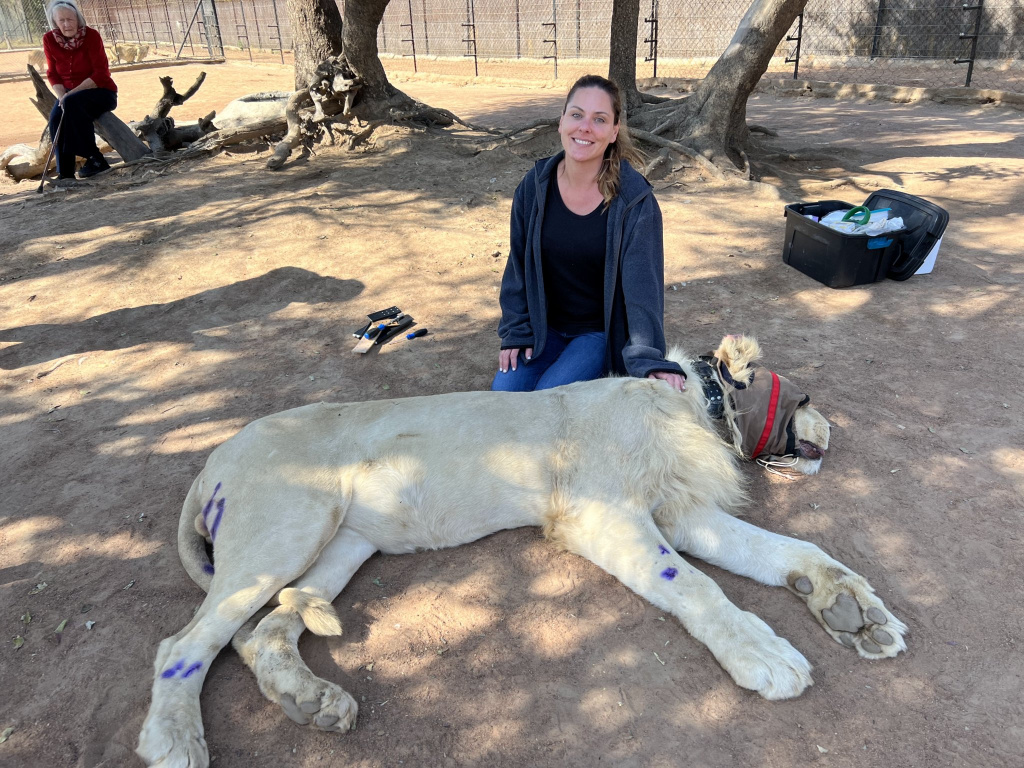
Our views on animal intelligence have also changed dramatically over time. Tool use, for example, was once thought to be uniquely human, until scientists discovered chimpanzees using sticks to fish for termites. Since then, tool use has been found in many species, reminding us that the more carefully we study animals, the more complex and surprising their behavior often becomes.
The Evolution of Minds
What sparked your specific interest in how carnivores, and lions in particular, think and solve problems?
Dr. Borrego: One idea scientists have proposed is that social life may help drive the evolution of intelligence. Living in a group means animals not only have to deal with challenges in their environment, but also navigate relationships, cooperation, competition, and communication with other individuals. Lions are especially interesting for this because they are the only truly social big cat. That gives us a unique opportunity to compare them with their more solitary relatives, like leopards or tigers, and explore whether living in complex social groups shapes how animals learn, make decisions, and solve problems.
In reality, cognition is incredibly difficult to study, and scientists are still working to distinguish between behaviors that reflect flexible problem-solving and behaviors that may simply follow learned rules or instincts.
Social Intelligence
Lions are the only truly social cats. How does living in a pride influence their cognitive development compared to solitary hunters like leopards or tigers?
Dr. Borrego: That’s one of the questions that originally drew me to lions in the first place. Lions are fascinating because they are living in a social system that is completely different from the other big cats. A leopard or tiger can rely almost entirely on itself, whereas lions have to constantly navigate relationships with pride members, coordinate movements, recognize individuals, and, in some cases, cooperate during hunting or territorial defense. And navigating those relationships might require different cognitive skills.
The Domestic Connection
As an expert on large carnivores, how do you see the link between the cognition of wild lions and our domestic cats? Are there significant cognitive similarities, and what is the biggest „myth“ about the domestic cat’s mind that your research helps debunk?
Dr. Borrego: I actually think domestic cats are far more cognitively sophisticated than people often give them credit for. Because they are smaller, quieter, and less overtly social than dogs, people sometimes assume they are less intelligent or less socially aware. But cats are incredibly perceptive animals that are constantly gathering information about their environment, routines, and the people around them.
One of the really interesting parallels between lions and domestic cats is that many of the underlying cognitive building blocks are probably still there — things like problem-solving, communication, social recognition, spatial memory, and reading behavior. Domestic cats may not live in prides, but they still form social relationships and can be remarkably flexible in how they communicate with humans. In fact, there is evidence that domestic cats developed vocalizations specifically for interacting with people, which I think says a lot about their adaptability and social awareness.
Living in a group means animals not only have to deal with challenges in their environment, but also navigate relationships, cooperation, competition, and communication with other individuals. Lions are especially interesting for this because they are the only truly social big cat.
I think one of the biggest myths about domestic cats is that they are “aloof” or don’t form meaningful social bonds. A lot of cat behavior is simply more subtle than what people are used to seeing in dogs. When you start paying attention, you realize cats are constantly communicating — through body posture, scent, vocalizations, attention, and routine. The more we study both wild and domestic cats, the more we are discovering that their behavior and cognition are much more complex than we once assumed.
Group Problem-Solving
Your research has shown that lions can coordinate. Is this behavior instinctive, or do they „plan“ and learn from each other’s experiences?
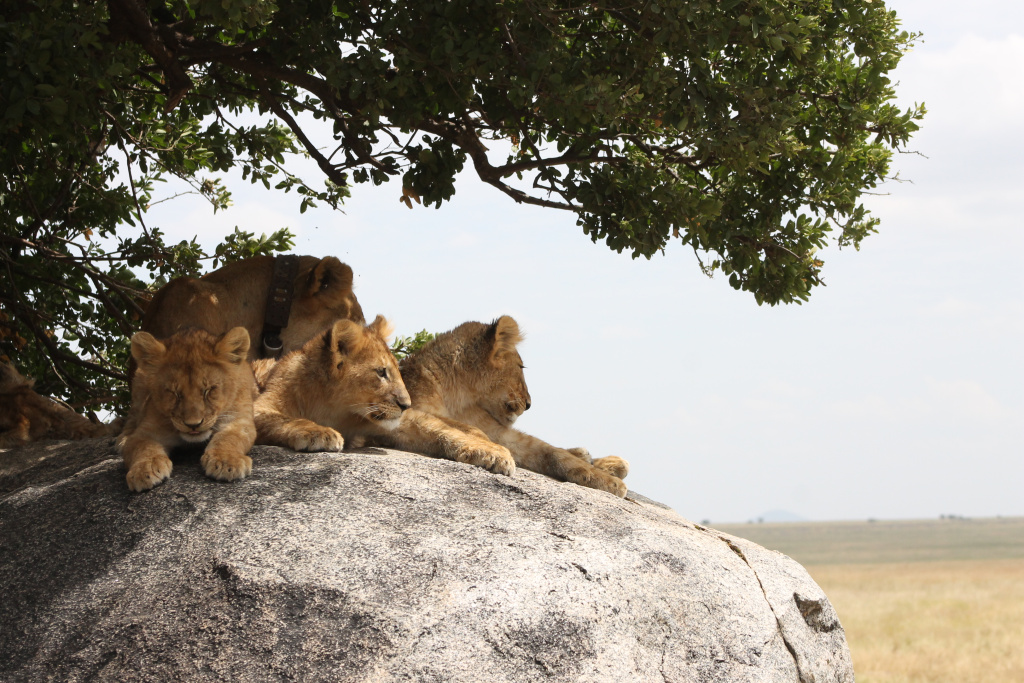
Dr. Borrego: This is still one of the big unanswered questions in my research. We know lions are capable of learning and remembering task-related problems, but the extent to which they can learn during coordinated group behavior is still unclear. In some of my work, I found that for relatively simple cooperative tasks, lions did not seem to need close coordination or active attention to what their partner was doing in order to succeed. However, those tasks were fairly simple and may not fully capture the complexity of coordination in the wild.
I have also found evidence that lions can learn by watching the behavior of other lions, which is fascinating and suggests a level of social learning. But more cognitively demanding abilities — things like planning ahead or anticipating future outcomes — remain much harder to study and are still major question marks.
One of the really interesting parallels between lions and domestic cats is that many of the underlying cognitive building blocks are probably still there — things like problem-solving, communication, social recognition, spatial memory, and reading behavior. Domestic cats may not live in prides, but they still form social relationships and can be remarkably flexible in how they communicate with humans.
Planning is actually far more cognitively complex than many people realize. It requires an animal not only to respond to what is happening in the moment, but to mentally represent a future situation, anticipate possible outcomes, and adjust behavior in advance. Distinguishing true planning from instinct, routine behavior, or simple learned associations is one of the biggest challenges in animal cognition research.
Cognition in the Wild vs. Captivity
How do the cognitive challenges differ for lions in protected wild areas versus those in managed environments?
Dr. Borrego: Lions in captive environments live under very different conditions than lions in the wild. Wild lions face constant challenges; they must find and hunt prey, defend themselves and their territory from rival lions, avoid human threats such as poaching, and successfully raise offspring in unpredictable environments. Captive lions, by comparison, have consistent access to food, veterinary care, and protection from many of these pressures.
Interestingly, this difference in environment can also influence behavior and cognition. Because captive lions are not exposed to the same level of risk or uncertainty, they are often more willing to explore unfamiliar objects or engage with new situations. In cognitive research, that willingness to investigate and experiment can sometimes make them appear better problem-solvers, simply because they are more likely to interact with a task and try different approaches. In contrast, wild lions may be more cautious around unfamiliar situations, where curiosity could carry real risks.
When you start paying attention, you realize cats are constantly communicating — through body posture, scent, vocalizations, attention, and routine. The more we study both wild and domestic cats, the more we are discovering that their behavior and cognition are much more complex than we once assumed.
National Geographic Journey
Could you share a brief moment from your fieldwork that felt like a „discovery“ moment—something that surprised even a scientist of your rank?
Dr. Borrego: One of the moments that really changed how I think about lions came from my work in the Central Kalahari, Botswana. The classic view is that lions hunt cooperatively because hunting together allows them to take down large, dangerous prey that would be difficult or impossible for a single lion to hunt alone. But in my recent work, I’ve found that lions can actually hunt very successfully by themselves, even prey as large as giraffe.
What surprised me most was not just that they were capable of doing this, but that the behavior seemed tied to the environment they were living in. In these desert systems, prey is far less abundant and much harder to find than in places like the Serengeti. That means lions may sometimes need to take risks or use strategies that lions in prey-rich environments simply do not need to rely on; cooperative hunting may not always be about what lions can hunt, but about reducing risk and effort when they have the opportunity to hunt together. It was one of those moments where you realize the animals are not following the “rules” we wrote about them in textbooks nearly as closely as we assumed.
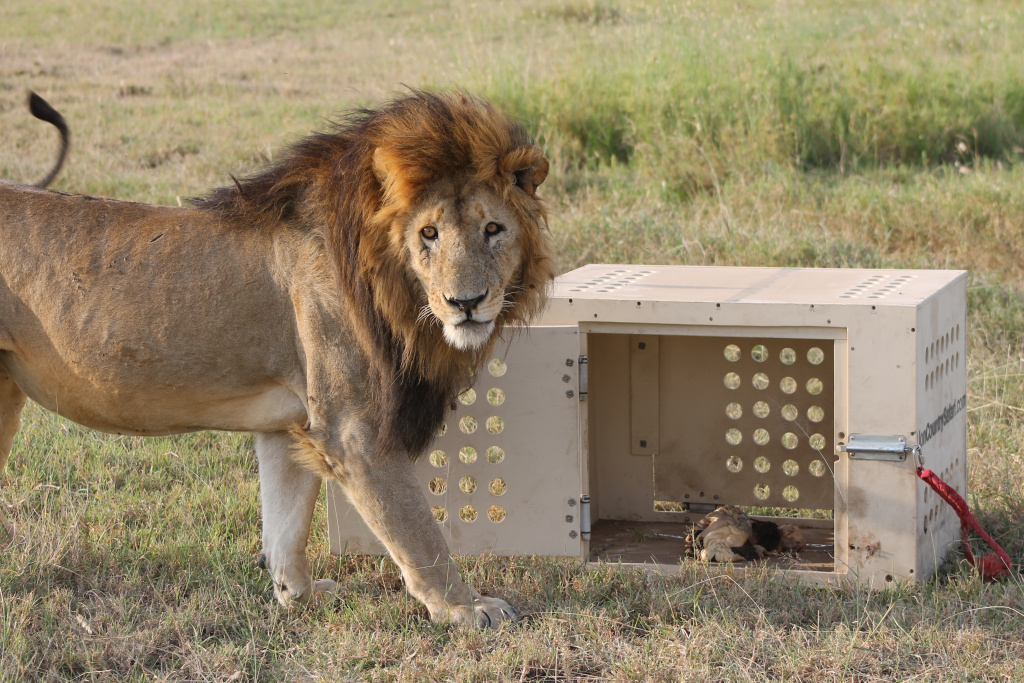
I think that’s one of the most exciting parts of studying animal behavior. The more closely we look, especially in systems that are less studied, the more we realize there is still so much left to learn.
Advice for the Community
What is your advice for young veterinarians or researchers who want to dedicate their lives to ethology and wildlife conservation?
Dr. Borrego: If you want to work in animal behavior or wildlife conservation, my biggest piece of advice is to focus less on finding the “perfect” path and more on building useful skills and experience. There are many ways into this field, and not all of them are traditional academic routes. Some people come in through veterinary medicine, animal care, or conservation management.
I would also encourage people to spend as much time in the field as possible, even early on. Wildlife work often looks very different in reality than it does from the outside. Being comfortable working in difficult environments, solving problems with limited resources, collaborating with different kinds of people, and learning to observe animals carefully are all incredibly valuable skills that cannot really be learned from a textbook alone.
And one thing I think surprises many people is that effective conservation is often much more about people than animals. Studying animal behavior is important, but long-term conservation success usually depends on working alongside local communities, understanding livelihoods and human needs, building trust, and finding ways to reduce human–wildlife conflict. In many systems, the biggest conservation challenges are not biological questions, they are social, economic, and political ones.
Finally, do not underestimate the importance of persistence. This field can be competitive and nonlinear, and most people’s careers do not unfold in a straight line. Opportunities often come from relationships, reputation, and consistently showing up and doing good work over time.
Рубриката „VetX Global“ достига до вас с любезното съдействие на: